
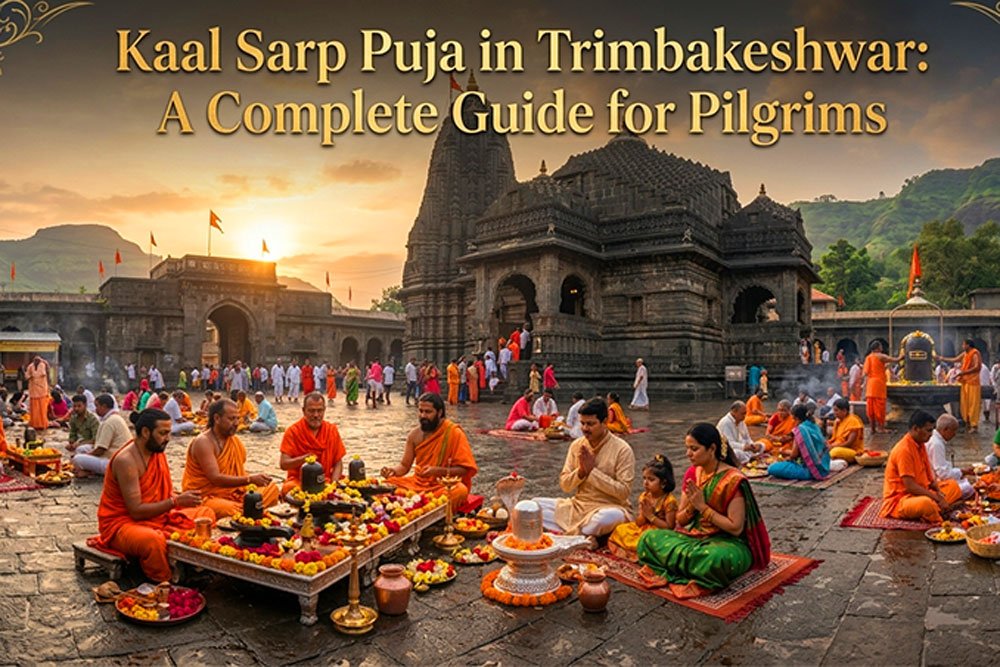
Trimbakeshwar temple is one of the most important pilgrimage sites in India and is considered a sacred place in Hindu mythology. The Trimbakeshwar temple’s main deity is Lord Shiva, so people visit this temple to worship Lord Shiva and perform traditional rituals throughout the year.
Kaal Sarp Dosh Puja is one of the most important rituals of Trimbakeshwar, especially for those who believe in Vedic astrology. Knowing the ritual’s religious context, its traditional use, and the practicalities of visiting the temple can help make the journey more meaningful for a pilgrim or devotee.
Conducting Trimbakeshwar kaal sarp puja also offers a chance to visit the sacred Shiva temple, to witness the traditional religious rituals, and to spend some time in the environment that is closely associated with the religious pilgrimage of Hindus.
Introduction to Trimbakeshwar as a Pilgrimage Destination
The main attraction of Trimbakeshwar is the Trimbakeshwar Temple, a sacred shrine dedicated to Lord Shiva. The temple is considered one of the twelve Jyotirlingas and is considered a significant pilgrimage site for Shiva devotees.
The temple’s sacredness is enhanced by its proximity to the Brahmagiri Hills and its connection to the Godavari River. The Trimbakeshwar temple’s sacred geography and traditional rituals have made Trimbakeshwar an everlasting place of pilgrimage.
Devotees visit this temple town specifically to worship Lord Shiva, while others participate in particular rituals or seek a deeper connection with their religious traditions. Whatever the purpose of the visit, pilgrims show respect for the temple, its customs, and other devotees.
What Is Kaal Sarp Dosha
Astrologers who are aware of Kaal Sarp Dosha usually link it to a specific planetary combination in a horoscope where the seven traditional planets are situated between Rahu and Ketu (which are known as shadow planets or lunar nodes).
In Hindu beliefs/mythology, the planets Rahu and Ketu have symbolic significance. Rahu is considered the personification of desires, worldly ambitions and attachments, while Ketu is regarded as the personification of detachment, introspection and spiritual orientation. Their symbolism helps to interpret karmic patterns and inner transformation in astrology.
Note: Kaal Sarp Dosha interpretation differs from school to school of Vedic astrology and from astrologer to astrologer. Some practitioners consider the configuration to be important; others do not consider it to be important.
The interpretations are based on traditional astrological belief systems and should not be used as scientifically proven explanations of individual situations. It enables the devotees to appreciate the ritual in its cultural and religious context, and to engage in the ritual in an informed way.
Significance of Kaal Sarp Puja
Those who feel that Kaal Sarp Dosh is important in their horoscope can perform Kaal Sarp Puja as a traditional form of worship. The ritual is usually interpreted as a gesture of reverence and an effort to achieve spiritual equilibrium, tranquillity, and divine mercy.
The meaning of the ceremony may vary among devout individuals. The ritual is a chance for devotees to discuss concerns that were discovered through their astrological tradition. It is a devotional practice, mostly in terms of prayer and surrender to divine guidance, for others.
The ritual can also help to foster personal reflection. Pilgrimage demands that the people abandon their daily lives and dedicate time to prayer and spiritual practice. The significance of the ceremony may not just be in the ritual but also in the individual experiences of the devotees.
However, devotees should not consider the puja as a sure-shot remedy for all of their ills, wealth, relationships, career, etc. Traditional religious beliefs can be important culturally and spiritually, but do not offer any scientific assurances regarding material consequences.
Why Trimbakeshwar Is Associated With This Puja
The importance of Kaal Sarp Dosh Puja is closely intertwined with the significance of the place as a Shiva pilgrimage site in Trimbakeshwar. In Hindu practices, the snake or serpent plays a mystical role, and Lord Shiva holds a significant place in the context of spiritual transformation, fear, and attachment.
Trimbakeshwar offers a natural environment for devotees who wish to perform traditional rituals. The presence of the Jyotirlinga shrine, the sacred landscape and the longstanding culture of pilgrimage contribute to the importance of the destination for pilgrimage.
If you are a devotee, the ritual can be performed at a well-known pilgrimage centre, which can give it a spiritual dimension. Travel is part of religious observance, along with temple worship, prayer, and ritual.
What Devotees Should Know Before Planning the Puja
Devotees should know the procedure for conducting the kaal sarp puja and make the necessary arrangements before they reach Trimbakeshwar.
The devotees can find out more about the typical way of worship, when it will take place and what preparations are expected by talking to an experienced and knowledgeable pandit conducting rituals in Trimbakeshwar.
The actual requirements may differ as per the type of ritual. Devotees should thus check the date and time of the ceremony, anticipated length of time, what is needed for the ritual, and the number of participants attending the ritual.
For details of the traditional ceremony, devotees can get more information by going through the Trimbakeshwar Kaal Sarp Puja link as part of their preparations.
Devotees can contact the experienced pandit to get information about the process of conducting Kaal Sarp Dosh Puja before travelling to Trimbakeshwar to get a better understanding of the ritual and plan their visit accordingly. Such information is particularly helpful during festival periods and other times when pilgrimage activity is high.
General Overview of the Puja Process
Information on the exact form of Kaal Sarp Puja may vary with the tradition and type of ritual being conducted. The puja begins with a sankalp whereby the devotee may declare his or her intention to perform the puja.
The pandit then chants mantras invoking the deities that help in removing the obstacles due to Kaal Sarp Dosh. The pandit also carries out the traditional puja and practices.
Puja and mantra chanting are some of the key activities associated with the Kaal Sarp Puja. Trimbakeshwar is a significant pilgrimage site in the context of worshipping Lord Shiva and the religious nature of the event, within the overall Vedic context that also includes conducting different types of rituals.
Devotees conducting the puja within the premises of the temple are expected to take part in certain sections/processes of the Kaal Sarp Puja. These formal sections may be completed by providing offerings under the guidance of experienced pandits.
The precise course of the Kaal Sarp Puja should be clarified in advance before attending the event. It is advisable to consult the temple pandit directly before travelling to prepare effectively for the Kaal Sarp Puja.
Tips for Pilgrims Visiting Trimbakeshwar
Those intending to make a trip to Trimbakeshwar can develop a plan covering practicalities and spirituality. Devotees should be well informed about travel opportunities and, in particular, the specifics of the temple before travelling to Trimbakeshwar.
Visitors or devotees should become familiar with the vicinity/premises to allow them to develop a more rounded experience. The temple of Trimbakeshwar should be approached or visited with a sincere understanding of its significance.
The temple premises are religiously important rather than merely being considered a tourist destination. Devotees are encouraged to respect the customs of the temple and its pandits conducting rituals and proceedings.
Devotees should also maintain the cleanliness of the pilgrimage site by avoiding rubbish disposal at the temple premises. Devotees should also be aware of restrictions such as not having cameras and video equipment in certain areas of the temple.
Devotees should refrain from entering certain areas of the temple and interrupting any religious events. Those wishing to explore other places beyond Trimbakeshwar can consider visiting the Brahmagiri Hills, which offer panoramic views.
Choosing the Right Approach to the Pilgrimage
There is no one way to undertake a pilgrimage to Trimbakeshwar. Depending on interests and beliefs, some individuals may wish to isolate themselves completely while others may wish to combine rituals with sightseeing.
The key is to develop a process reflecting the choice of the individual devotees. Those wishing to perform Kaal Sarp Puja should first gain knowledge about the astrological traditions behind the rituals and then consult with an experienced pandit who has rich experience in conducting this puja.
Devotees who understand both the religious process, its significance and the practicalities of the rituals can avoid difficulties while conducting the puja.
Conclusion
Proper understanding of the Kaal Sarp Puja and the various offerings and religious steps involved is crucial to ensure the experience of visiting Trimbakeshwar temple is fulfilling and enriching.
Therefore, devotees seeking a spiritual experience along with an understanding of the religious importance of the visit should be well prepared in advance before planning their trip to Trimbakeshwar. The rituals conducted at Trimbakeshwar temple are an expression of the mystical power of Shiva and the flow of devotion.
As such, your spiritual journey built around sound preparation would provide you both ritual fulfilment and the opportunity to embark on a spiritual journey that results in bringing peace of mind and overall prosperity.




Comments are closed